Secure online whiteboards for enterprises: what to consider
For business
Whiteboard
Team
2 min read
April 30, 2025
Digital tools have become an integral part of the corporate environment, and virtual whiteboards hold a special place among them. They help organize collaboration, speed up decision-making and visualize complex processes. However, for large companies and organizations with a high level of responsibility, what matters is not only an online whiteboard's features but also its security.
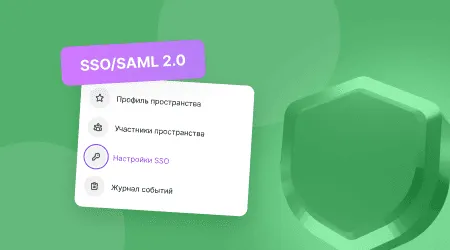
Why security is critical
A corporate environment handles a huge amount of confidential information, from trade secrets to employees' personal data. The online whiteboard your team works on becomes part of this infrastructure, and any vulnerability in the system can have serious consequences: data leaks, financial losses or compliance violations.
Choosing a secure online whiteboard is not just a matter of convenience but a strategic decision to protect corporate interests.
Main threats when using online whiteboards
Before rolling out a virtual whiteboard in your company, it's important to consider the potential risks:
Data leaks — unauthorized copying or distribution of internal information.
Unauthorized access — outsiders being able to join a working board without permission.
Unreliable storage — no guarantee that the vendor protects your information.
These threats are especially relevant for remote work, when teams use boards to store strategic documents and discussions.
Key requirements for secure virtual whiteboards
To minimize risks, enterprise customers have specific requirements for products:
Data encryption is a must, both in transit (TLS) and at rest (AES-256).
Support for enterprise protocols:
1. SSO (single sign-on) — a single entry point to the corporate system;
2. SCIM (System for Cross-domain Identity Management) — automated account management;
3. 2FA (two-factor authentication) — an extra layer of protection at login.Role-based access control — the ability to assign permissions (view, edit, administer) depending on a person's position.
Auditing and activity logs — logging activity for internal control and investigations.
Compliance with international standards:
1. ISO 27001 — certification of the information security management system;
2. SOC 2 — compliance with security, availability and confidentiality requirements;
3. GDPR — personal data protection in line with EU law.
Which solutions meet security requirements
Today, the market offers several solutions that are widely used in corporate environments. Among them are flip, Miro Enterprise, Lucidspark for business, Microsoft Whiteboard (part of Office 365) and other products with advanced security features.
They let you manage users centrally, offer advanced privacy settings and integrate with companies' internal systems.
Online whiteboard security is the foundation of trust between employees, customers and the business. When choosing a collaboration platform, large companies should look not only at interface convenience and features but, above all, at compliance with security standards. Reliable data protection, access control and action auditing are the foundation of risk-free digital work.
Authors

flip
Team